We investigate the relationship between transcription and DNA damage repair
Transcription, DNA damage and repair are more intertwined than expected. DNA repair factors actively participate in the transcription process and many types of DNA damage, along with their processing repair factors, are essentials to initiate and support gene expression.
Scheduled DNA damage in Transcription
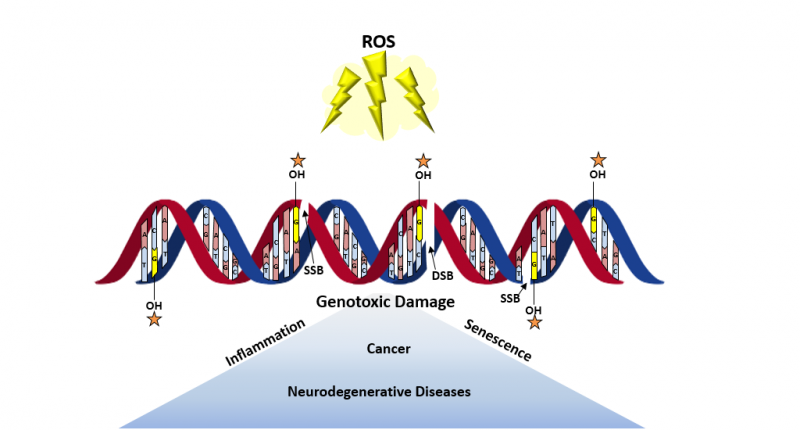
Reactive oxygen species are produced continually from normal cellular metabolism, but may be produced in excess, leading to oxidative stress. In the DNA context, deoxyguanosine (G) is particularly susceptible to the action of ROS (Reactive Oxygen Species) and undergoes an oxidative process generating the 8-oxodG. The enzymatic removal of 8-oxodG is catalyzed by nucleotide excision repair (NER) or by base excision repair (BER) mechanisms.
Our group, studying the events occurring few minutes after MYC binding to DNA, has proposed a model in which MYC-mediated transcription requires DNA oxidation, and specifically the formation of 8-oxodG, as scheduled DNA Damage to activate the transcription of target genes.
Given the implication of DNA oxidation in the pathogenesis of a wide variety of diseases, it is likely that formation and removal of 8-oxodG represents a tightly regulated process
We have recently developed a novel technique, named OxiDIP-Seq, to profile the distribution of 8-oxodG in the human and mouse genome. Our results showed that DNA oxidation does not occur randomly, but accumulates in specific regions of the genome, called fragile sites.
Accurate processing of genetic information requires the coordinated assembly of the transcription apparatus at selected gene promoter and a highly-choreographed cascade of events. The aim of our group is the understanding of the cause-and-effect relationship between transcription and DNA damage, in both physiologic and pathologic conditions.
A full understanding of this relationship will pave the way for the comprehension of the mechanisms underlying human pathologies linked to the overabundance of ROS, such as aging, cancer and neurodegenerative diseases.